How much does a concrete slab cost in Panama City?
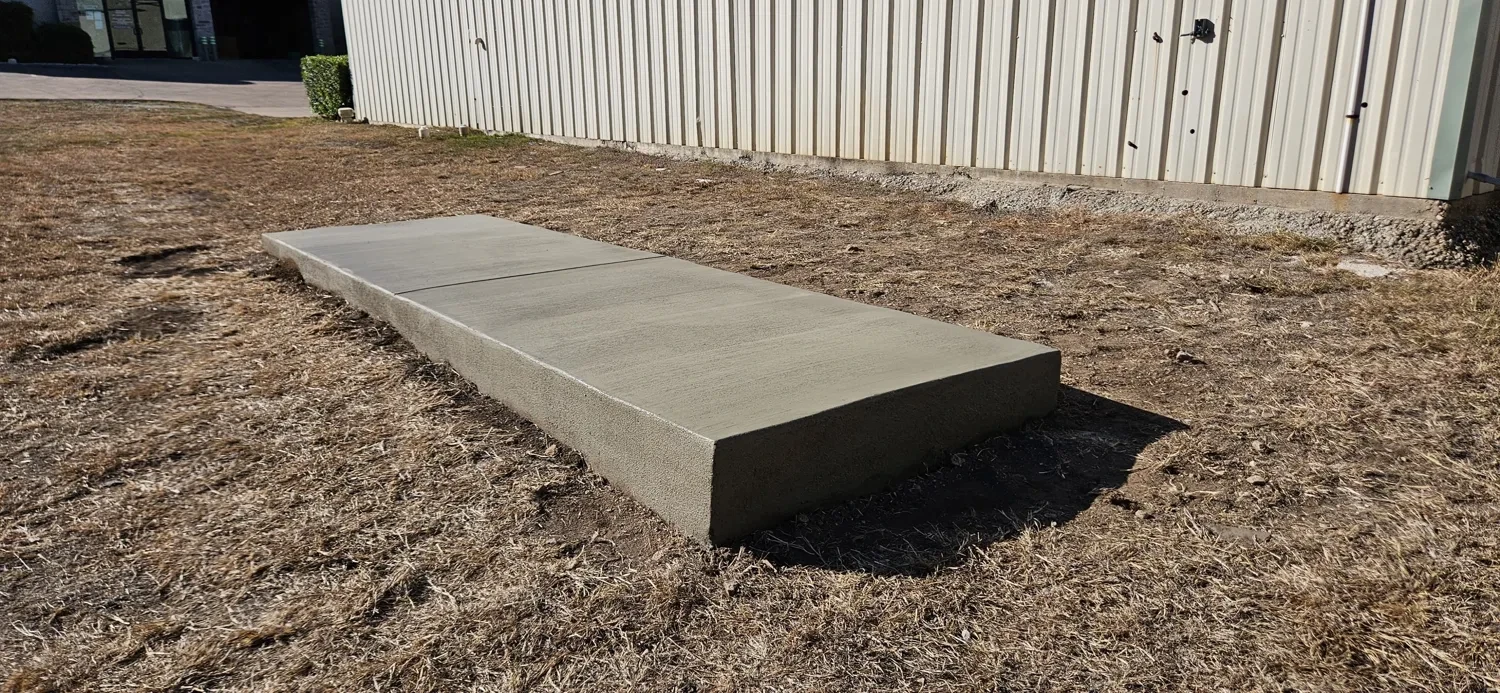
Pads and slabs price to the load and the sand: reinforcement matched to the use, a base tamped over a high water table, and a grade that sheds water off. For an honest opening point, most pads and slabs land somewhere near $7 to $13 per square foot, with thickness and any vapor barrier moving the figure. Whatever the pad has to hold is what we size it and bill it against, drawn up after we see the ground.
What reinforcement goes in a slab here?
On most residential pads we run structural fiber through the batch and welded wire mesh across the slab, which is routine panhandle flatwork. When the load turns genuinely heavy or structural, a shop floor parking trucks being the clear case, a steel rebar grid goes in, since hauling that kind of weight is the job rebar was made for. We match the reinforcement to the load in front of us instead of loading a light pad with steel that only feeds corrosion in bay salt air.
How thick does my slab need to be?
That follows the load. A shed pad carries a fraction of the weight a garage or shop floor under vehicles and gear has to bear, so we match thickness and reinforcement to your real use and account for the loose sand and high water table below it.
Will a slab hold a hot tub, RV, or boat?
Yes. A hot tub, an RV, or a boat trailer puts its weight down in a small footprint, so we deepen the slab and step up the reinforcement, adding rebar once the load truly warrants it. Set on bay-side ground, a boat or RV also needs a base that stays level as the sand takes on and sheds water, so the drainage earns as much attention as the steel. Tell us what is going on the pad and we size the whole build to it.
Do I need a vapor barrier under the slab?
For enclosed or conditioned slabs, usually yes, since a high water table and damp Panama City sand drive moisture up through concrete. We decide it based on how the slab is going to be used.
Does a concrete slab require a permit?
Some do, depending on size, placement, and use, and the rules vary across the City of Panama City, Bay County, and the smaller jurisdictions nearby, with extra review common inside the flood and surge zones. We flag when a permit looks likely so it gets squared away early instead of surfacing mid-job.